

Runa Laila
Discover songs, music and releases from Runa Laila.
About Runa Laila
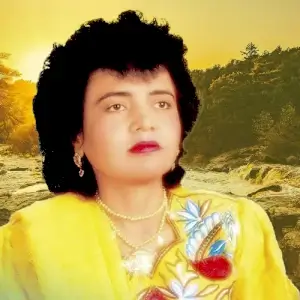
Runa Laila is one of the most iconic and influential singers in South Asian music history, renowned for her powerful voice, versatility, and extraordinary ability to sing in multiple languages, including Sindhi, Urdu, Hindi, Bengali, Punjabi, Gujarati, Pashto, Balochi, Arabic, Japanese, English, and many more. Her career has spanned over six decades, crossing borders of nations, cultures, and generations.
Born on 17 November 1952 in Sylhet in East Bengal (then part of Pakistan), Runa’s voice and artistry transcended geographical boundaries, becoming a cultural symbol in Pakistan, Bangladesh, and India.
Early Life and Musical Roots
Runa Laila was born on 17 November 1952 in Sylhet, East Bengal (then part of Pakistan) to Emdad Ali and Amina Laila. Her family later moved to Karachi, Pakistan, where her musical talent began to emerge. From a very young age, Runa displayed remarkable musical aptitude, winning school competitions and training under classical music teachers, including Ustad Habib Uddin Khan and Pandit Ghulam Qadir. Her early exposure to Sindhi, Urdu, Bengali, and other regional music laid the foundation for her multilingual singing career.
Breakthrough in Pakistan’s Film & Music Scene
Runa Laila’s professional journey began in the mid‑1960s. At only 12 years old, she recorded songs for the Pakistani film Jugnu, including Gudiya Si Munni Meri Bhaiya Ki Pyari and Marna Bhi Nahin Aasan.
Her breakthrough came in 1966 with the Urdu film Hum Dono. The song “Unki Nazron Sey Mohabbat Ka Jo Paigham Mila” quickly made her a household name in Urdu cinema playback singing before she even turned fifteen.
During this early phase, she frequently collaborated with legendary Pakistani playback singer Ahmed Rushdi, whose singing style influenced her own dynamic vocal delivery.
Beyond film songs, Runa started hosting her own television show on PTV, called Bazm‑E‑Laila, where she performed and engaged audiences. Her charismatic presence on TV helped deeply embed her artistry in the Pakistani cultural consciousness.
Multilingual Magic: Singing in Many Languages
One of Runa Laila’s most distinctive attributes is her unmatched multilingual repertoire. In her career, she has sung in at least 18 languages, including her native Bengali, Hindi, Urdu, Sindhi, Punjabi, Gujarati, Pashto, Balochi, Arabic, Persian, Malay, Japanese, Italian, Spanish, French, Nepali, and English — showcasing her vast vocal adaptability and cultural reach.
Her ability to sing in Sindhi and other regional languages helped connect with audiences across Pakistan, especially regions like Sindh, where she performed Sindhi film and folk songs that resonated deeply with local musical traditions.
This linguistic versatility allowed her to record thousands of songs across genres — ghazal, pop, filmi, folk, sufi, and even international styles — which helped her shape a truly global profile.
Transition to Bangladesh and Bengali Music Legacy
In 1974, after the liberation of Bangladesh, Runa Laila moved with her family to her new homeland. Her musical journey then shifted more toward the Bangladeshi cinema (Dhallywood) and music scene.
Her first Bengali film song, O Amar Jibon Shathi, for the movie Jibon Shathi (1976), composed by Satya Saha, became a beloved classic in Bangladesh.
In Bangladesh, she embraced her Bengali roots while continuing to push musical boundaries — blending traditional influences with contemporary rhythms. Her Bengali songs like Jokhon Thambe Kolahol and Khacha Bhenge Pakhi Uregelo remain timeless hits with widespread cultural resonance.
Rise to International Stardom: India & Bollywood
Beyond Bangladesh and Pakistan, Runa Laila’s talent crossed borders into India’s Bollywood. In the mid-1970s,s she collaborated with renowned music directors Kalyanji–Anandji and later with Bappi Lahiri, who produced several disco‑influenced albums highlighting her adaptability to new sounds and pop styles.
Songs like O Mera Babu Chail Chabila and her rendition of the legendary Dama Dam Mast Qalandar garnered huge audience appreciation in India. Her collaboration with Bappi Lahiri on the disco album Super Runa (1982) sold impressively and gained international traction.
Her crossover success in Bollywood further elevated her status as a pan‑South Asia star, a rare feat for any singer of her era.
Awards, Honors & Records
Runa Laila’s contributions earned her numerous prestigious awards throughout her career:
Bangladesh Accolades
- Independence Award — Bangladesh’s highest civilian honor.
- Bangladesh National Film Awards — Best Female Playback Singer multiple times, es spanning films from the 1970s to the 2010s.
International Recognition
- Saigal Award — from India.
- Nigar Awards — Pakistan’s top cinema awards.
- Radio Mirchi Music Award — India.
- Lux Channel i Lifetime Achievement Award, Critics’ Awards, and more from multiple countries.
World Record
Runa Laila’s name appears in the Guinness World Records for recording 30 songs in just 3 days, a testament to her professionalism and vocal stamina.
Legacy & Cultural Impact
What makes Runa Laila truly legendary is not just her voice or awards, but her ability to connect with listeners emotionally across cultures and eras. From childhood competitions in Karachi to concerts around the world, she has inspired countless musicians across South Asia.
Her songs in Sindhi and other languages helped bridge cultural communities — ensuring that music remained a shared heritage across regions divided by borders. Her voice became synonymous with emotional depth, expressive power, and unmatched vocal clarity.
Beyond recordings, Runa has performed at major stages globally — from South Asia to the Middle East and Europe — reaching audiences across generations. Her music continues to be featured in modern remixes, broadcasts, and tributes.
Personal Life & Later Years
Runa Laila’s life has also included rich personal milestones. She married multiple times and collaborated closely with well‑known personalities, including actor Alamgir, whom she married later in life.
Despite her legendary status, Runa has always remained devoted to music — once famously stating she would continue singing as long as her voice holds.
Even in recent years, she has made appearances, judged talent shows, and released new music — proving her enduring relevance in evolving musical landscapes.
Conclusion
Today, Runa Laila stands not only as a celebrated singer but as an ambassador of South Asian music — a woman whose voice traveled across borders, languages, cultures,s and generations. Her story embodies resilience, artistic brilliance, and cross‑cultural unity — making her a timeless icon in a world that constantly seeks harmony through art.
All Songs
Explore songs by Runa Laila












Similar Artists
Discover more artists you may enjoy